End User Computing &
User-Focused Experience
I’m a maker at the end of the day, so my passion for developing solutions and helping people grow is a natural fit for me. The solutions on this page are products that require constant refinement and not just completed projects. And because I’ve focused the bulk of my career on the deployment of Apple devices, you’ll notice that it’s primarily Apple devices.

Some people are lucky when they can say they're proud of one thing they've done in their career. I've lost count of the things I'm proud of. My teams have helped find, and recover, stolen devices from around the globe. I’ve helped introduced iOS to support curbside delivery at Publix. Another team I managed helped support live television at NBC. I’ve migrated groups of unmanaged macOS computers and elevated them to an enterprise fleet multiple times.
The examples below are meant to give insight into how I approach my work and are selected from two organization: Publix Super Markets and NBCUniversal. The reason for this is because they are very different businesses with century-old organizations and cultures.
One of the biggest misconceptions about any endpoint-focused technology is that if the manufacturer of a device or management tool made it easy to use, it’s easy to manage and support in their organization. It can be, but dropping an iPhone or a Mac into an environment is just one part of any broader solution. For example, the development of an iOS app will take a lot of UX development to match a user’s expectations. But if the enrollment of a device is only using out-of-the-box processes, then the overall experience can be less-than-stellar. Especially if the organization itself is complicated. The setup workflow for any device or computer should be treated with the same care as a consumer app and workflows need to be tailored to the organization that uses it. The whole ecosystem needs to be user-focused.
The examples below were designed to be simple for others and were developed only after spending time with the people that would have the devices in their hands.
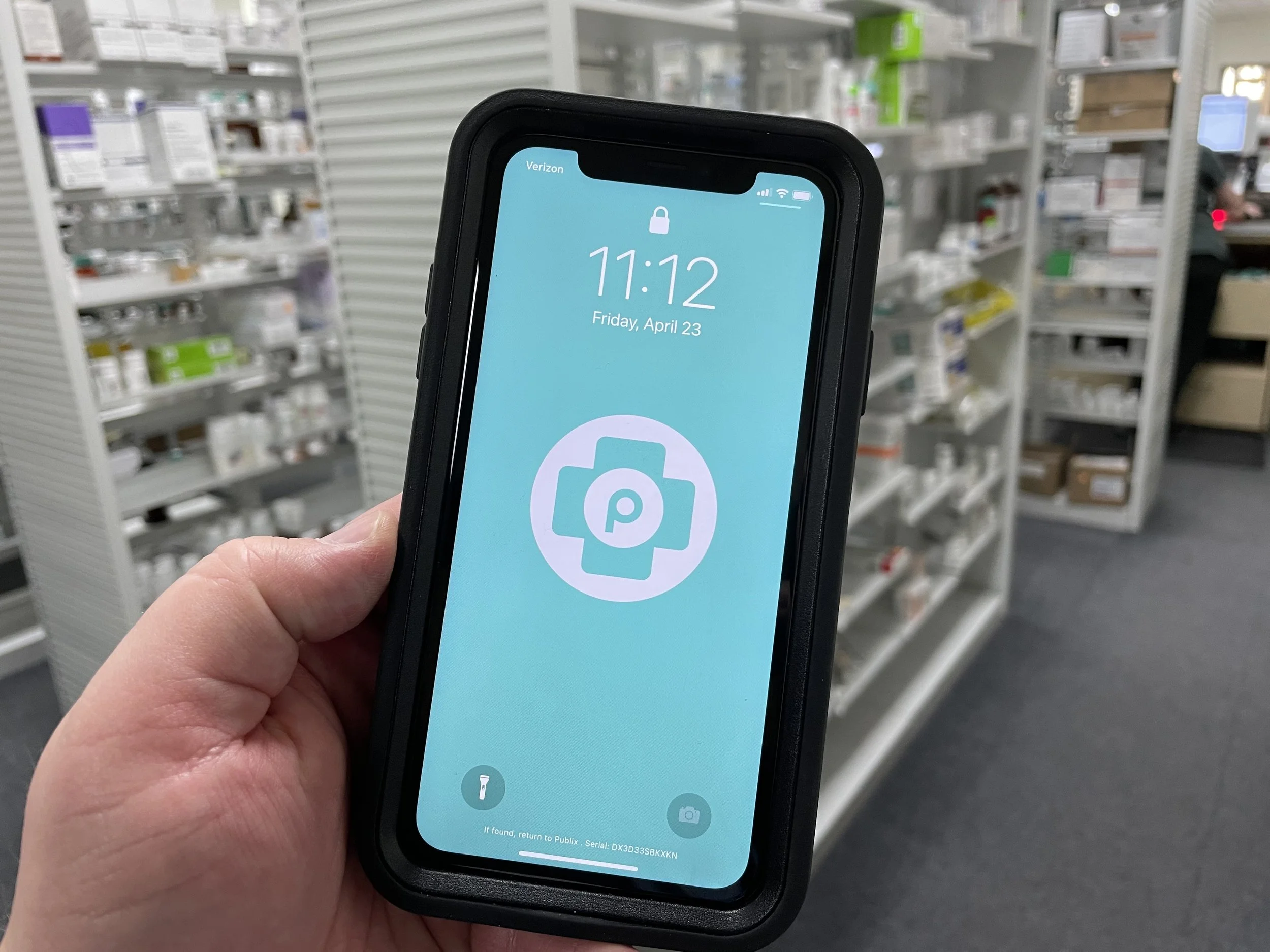
Publix In-Store Devices
Simplifying iOS enrollment in a regional grocery environment
Devices deployed: 2,800 to over 1,200 retail locations in the Southeast US*
Time saved: 1,400 hrs for enrollment/setup*
As of 2026, Publix now has over 13,000 iOS & iPadOS devices
The strategic program was simple: Put pharmacies in hospitals and give patients in those hospitals access to medications they might need before they went home. The team responsible for developing/purchasing technology for the retail pharmacies decided to use iOS and iPhones to enable those mobile transactions. They…
Developed a web-based app
Setup a secure VPN connection
Developed a process for setting up devices
Trained retail and IT support on the new processes
What they didn’t do:
Talk to anybody that would provide support or use the devices
The entire process was manual. They did not use management software and support relied on retail associates calling someone to arrange for a faulty device to be shipped to a central location. No pharmacy ever did this, so everyone thought it was a success.
I discovered during my first in-store visit why there were no known issues: Nobody reported them because it was too complicated and too time-consuming to get support. The stores simply traded devices with nearby location in a makeshift support system they’d developed themselves. All it took was that first in-person visit to develop a plan to make the devices easier to use and manage.
This process was also used for the new Publix Curbside program that began in 2019. In 2020, as a result of shopping behavior changes during the COVID pandemic, this was rolled out to every location (over 1,200) in two months. That would have been nearly impossible to pull off if a manual process was still in use at that time.
I did a presentation at the Jamf Nation User Conference (JNUC) in 2021 on the changes I implemented to make everyone’s lives easier to use and support the devices.
*Data as of 2021. Publix has continued to rollout iOS to retail location after I left. The continued use of iOS at Publix is a direct result of the success of these early programs and the ease of bot setup and support. By the end of 2026, Publix will have over 13,000.
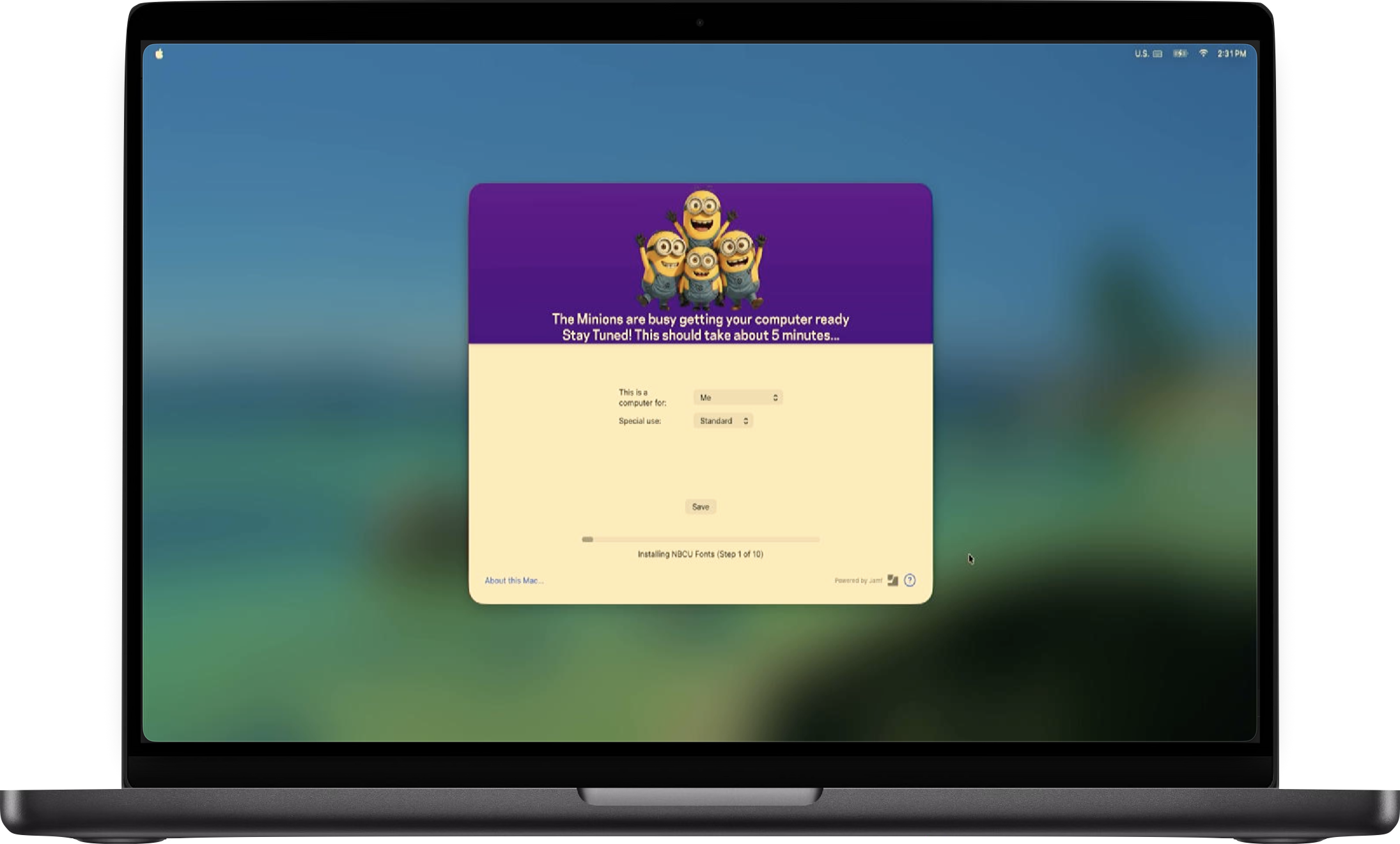
NBCUniversal macOS Enrollment
Simplifying macOS enrollment in a global entertainment environment
Macs deployed: 12,000 globally
Time saved per year: 92 8-hour workdays for new groups, 466 8-hr workdays for all new devices per year**
In 2022, NBCUniversal implemented Automated Device Enrollment in an effort to streamline the setup of new devices and make the experience easy. Macs could be shipped directly to people and support staff no longer needed to setup computers prior to use.
In reality, the new process made setup more complicated. Why?
First, the process was built to assume everyone will have an account. This is not always true. The process also assumes that the person that will be using the computer is the first person to touch the computer. This is also not always true. To complicate things, if you are the person setting up the computer for yourself, you are presented with a dialog box with 30 different options from which to choose. The process that was developed followed the industry trend of uusing a simple automated enrollment workflow, but it did not follow the input of Engineering’s internal business partners. This was not apparent until I actually started talking to the local support teams about their actual needs.
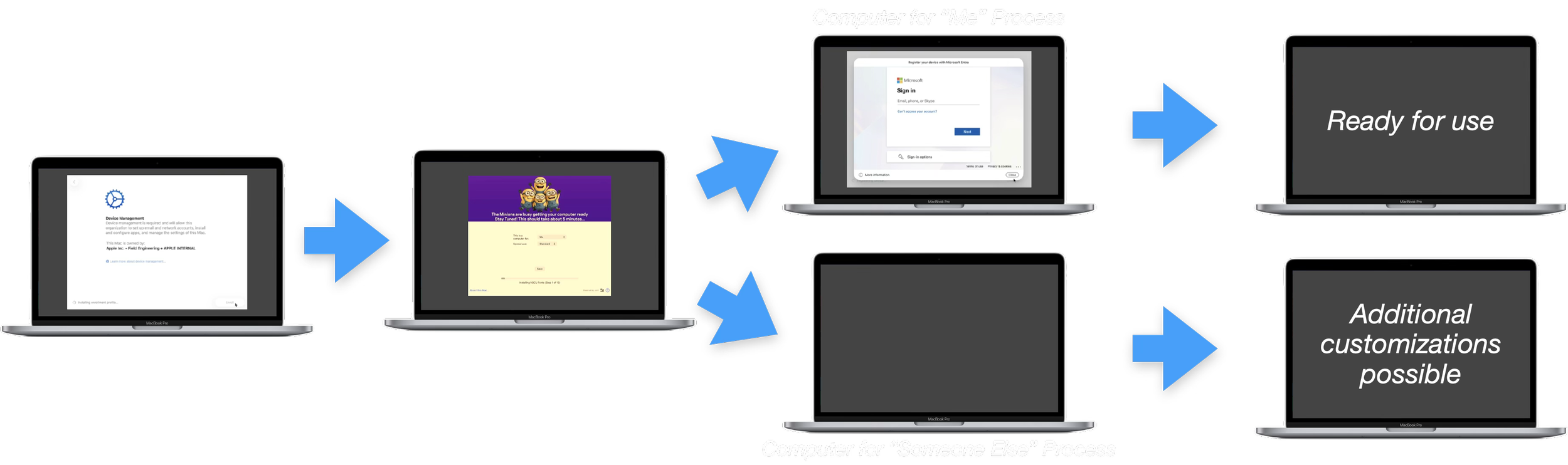
The single enrollment workflow (pictured to the right) was not “one size fits all.” It covered 80% of the corporate users, but 2/3 of the use-cases at NBCU were excluded from automated enrollment. In addition, any Mac that was excluded from automated enrollment and redeployed needed to be re-enabled for automated enrollment, usually only after a support call.
We decided to build a single process that would accomodate:
People that setup a Mac themselves
People that were going to setup a Mac for someone else
People that were going to setup a Mac for someone else with unique configurations
People that were going to setup a shared Mac for multiple people (post-production)
People that were going to setup a Mac for someone else that did would never have an account (short-term contractors on media projects)
People that were going to setup a Mac for future use without knowing when it would be deployed or who would receive it (loaners)
The process also had to present fewer selections for people so that it was easier for them to choose correctly. Instead of a list of 30, we gave them 5.
** Approximately 5,590 devices are enrolled each year. That includes new computers as well as redeployed computers. The new “Computer for someone else” process covered 20% of all Macs enrolled. The process as designed was complete after 20 minutes, but the manual process that it replaced took one hour on average.
Some other examples of work worth sharing

iPads deployed to rugged environments
While at Publix, my team was asked to replace ruggedized Windows laptops with iPad Pros. Since the iPads are used in construction, making them rugged and keeping them portable was key. Utilizing a zero-touch enrollment workflow was an important factor in the success of this solution since the people that were using them didn’t always have an office and worked exclusively out of their homes or in the field.

Android in Retail
Led the engineering team responsible for deploying 13,000 Android devices in the Publix retail and warehouse environments using Honeywell’s CT60. This meant refining processes around enrollment and maintenance.

Custom iPhone Cases
It’s hard to describe this as something beyond just purchasing a product from Otterbox, because it’s exactly that. But this was one of my favorite projects because it solves a few problems we were encountering. The first was a perception problem, because it’s easy to assume a retail associate is playing around on their phone when they’re actually working. The branding helps to prevent that. The second is identifying the device in case it was lost AND the display is damaged.